1. Consider What You Are Packaging
The first step is to consider the type of product that the bag will hold.
Different products require different levels of protection, strength, and functionality.
For example:
· Clothing and textiles may require clear garment bags that protect products from dust and moisture.
· Food products may require packaging made from suitable food-contact materials.
· Retail products often use shopping bags that are easy to carry and can be customized with a company logo.
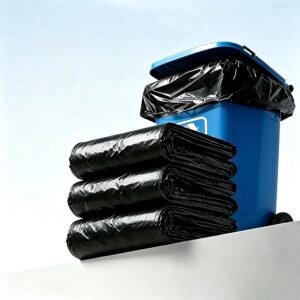
· Waste and industrial applications usually require strong garbage bags with higher load-bearing capacity.
· E-commerce products may require lightweight mailing or packaging bags that protect products during transportation.
Understanding the application helps determine the most suitable material, thickness, size, and bag structure.
2. Choose the Right Plastic Material
The material used to manufacture a plastic bag directly affects its strength, flexibility, transparency, appearance, and cost.
Common materials include polyethylene-based plastics such as LDPE, HDPE, and LLDPE.
LDPE Bags
LDPE bags are flexible, soft, and often have good transparency. They are commonly used for clothing packaging, product packaging, food packaging, and other applications where flexibility is important.
HDPE Bags
HDPE bags generally offer higher stiffness and good strength while using relatively little material. They are widely used for shopping bags, retail packaging, and various commercial applications.
LLDPE Bags
LLDPE provides good tensile strength and puncture resistance, making it suitable for applications where durability is important.The best material depends on your product, application, required strength, appearance, and target cost.
3. Select the Correct Bag Size and Thickness
Size and thickness are two of the most important specifications when ordering plastic bags.
A bag that is too small may not fit your product properly, while an unnecessarily large or thick bag can increase packaging costs.
Before placing an order, consider:
· Product dimensions
· Product weight
· Required bag opening
· Bag length and width
· Bottom or side gusset requirements
· Required thickness
· Transportation and storage conditions
For larger or heavier products, a stronger structure and appropriate thickness may be necessary.
For lightweight products, a thinner bag may provide sufficient protection while helping reduce material consumption and packaging costs.
4. Think About Printing and Branding
For retailers, manufacturers, clothing brands, supermarkets, and other businesses, custom printed bags can turn everyday packaging into a simple marketing tool.
When choosing a printing design, consider both the bag material and the number of colors required. Your packaging supplier can recommend a suitable printing method based on your design and order quantity.
5. Consider Environmental Requirements
Sustainability is becoming increasingly important for businesses and consumers around the world.
Depending on your market and application, you may consider options such as recyclable plastic bags, recycled-material packaging, or biodegradable and compostable alternatives where appropriate.
However, environmental claims should always be evaluated carefully. Different materials have different properties, certifications, disposal requirements, and suitable applications.
If your customers have specific environmental requirements, discuss these requirements with your plastic bag manufacturer before production.
6. Customization Can Make a Difference
7. Choose an Experienced Plastic Bag Manufacturer
The supplier you choose can have a major impact on product quality, consistency, lead time, and overall purchasing experience.
When evaluating a plastic bag manufacturer, consider:
Production experience
An experienced factory is more familiar with different materials, bag structures, and production requirements.
Quality control
Ask how the manufacturer controls raw materials, production processes, printing quality, dimensions, and finished products.
Customization capability
If you need custom sizes, printing, materials, or special specifications, make sure the supplier has the necessary production capabilities.
Communication and service
Clear communication is particularly important for international B2B orders. Your supplier should be able to understand your requirements and provide clear specifications and quotations.
Conclusion
Choosing the right plastic bag depends on much more than price. Material, size, thickness, application, printing, environmental requirements, and production quality should all be considered before placing an order.
For businesses purchasing plastic bags in bulk, working directly with an experienced manufacturer can make the process easier and help ensure consistent quality.
At Shunsheng Plastic Products, we have more than 30 years of experience in plastic packaging manufacturing. We provide customized plastic bags for different industries and applications, including shopping bags, garment bags, food bags, printed bags, garbage bags, and other plastic packaging products.
If you already have a bag specification, artwork, sample, or product requirement, contact us for a customized quotation.